Part of the Hidden Wonders: The Secret Lives of Earth’s Rarest Animals collection
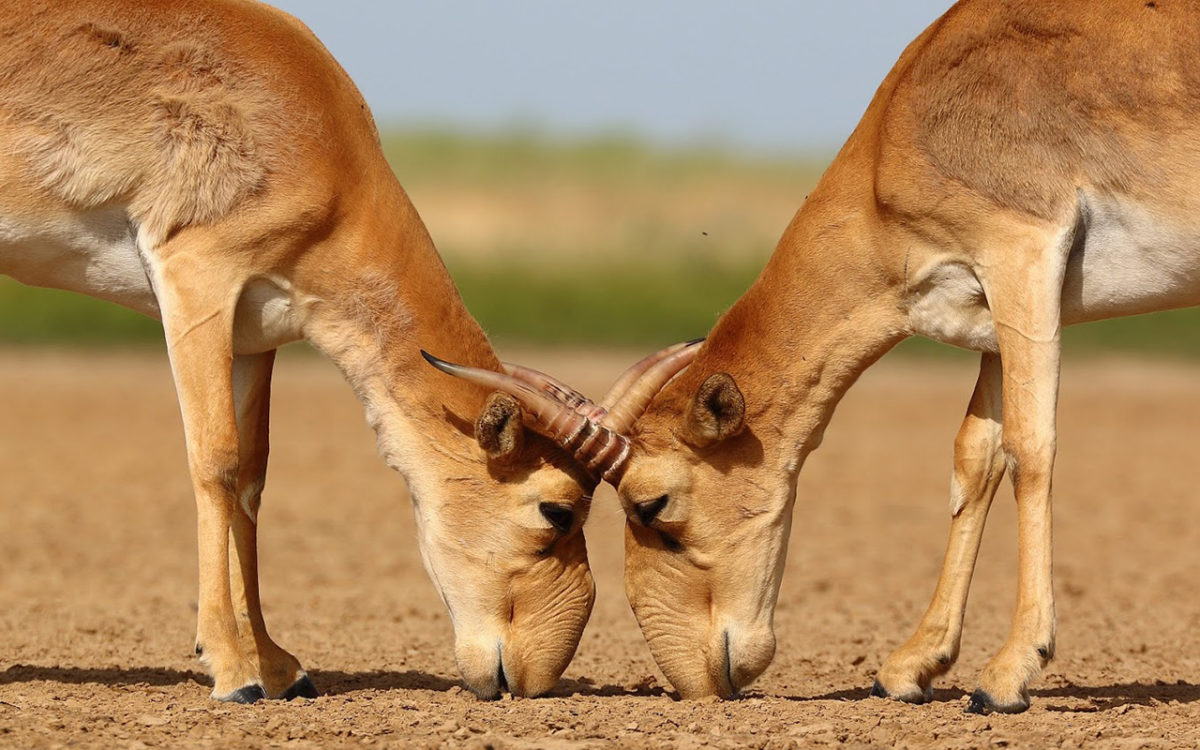
From the days of the woolly mammoth and sabre-toothed tigers, the saiga antelope has roamed the steppes since the last Ice Age. It almost joined the legendary duo in extinction (multiple times), but has recovered from Critically Endangered to Near Threatened.
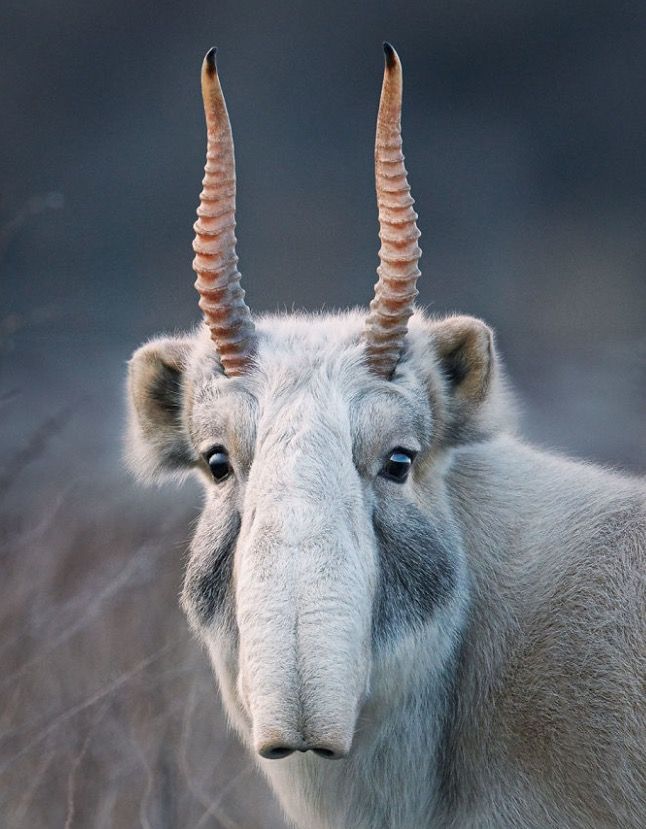
Fun Fact: During the breeding season, male Saiga Antelopes develop a unique and rather loud honking call, which they use to attract females and ward off rival males. This distinctive call, combined with their unusual noses, makes them one of the most peculiar and memorable animals of the Eurasian steppes!
Population
The population of saiga antelope is a worrying story of how animal populations can collapse with relative ease. During mid 1970s there were estimated to be around 1,250,000 individuals, but the collapse of the USSR introduced extreme hardship and porous borders, leading to skyrocketing rates of poaching. The largest population was reduced to 4% of its’ 1990 size and the skewed population nearly resulted in a reproductive collapse. By 2003, the Kazakh population of saiga had reduced to 21,000.
The story of the saiga is also a wonderful example of how conservation efforts can bring about enormous changes. Effective leadership from the Kazakh government, helped by charities and local people have stabilised and increased saiga numbers. Between 2015 to 2022, the Kazakh population ballooned by 1100% with annual increases of around 40%. The population in the Urals is now the highest it has been.
Conservation efforts include comprehensive population monitoring across many saiga ranges, large areas of protected areas (somewhat hindered by their large migration distances) and planning sustainable land management.
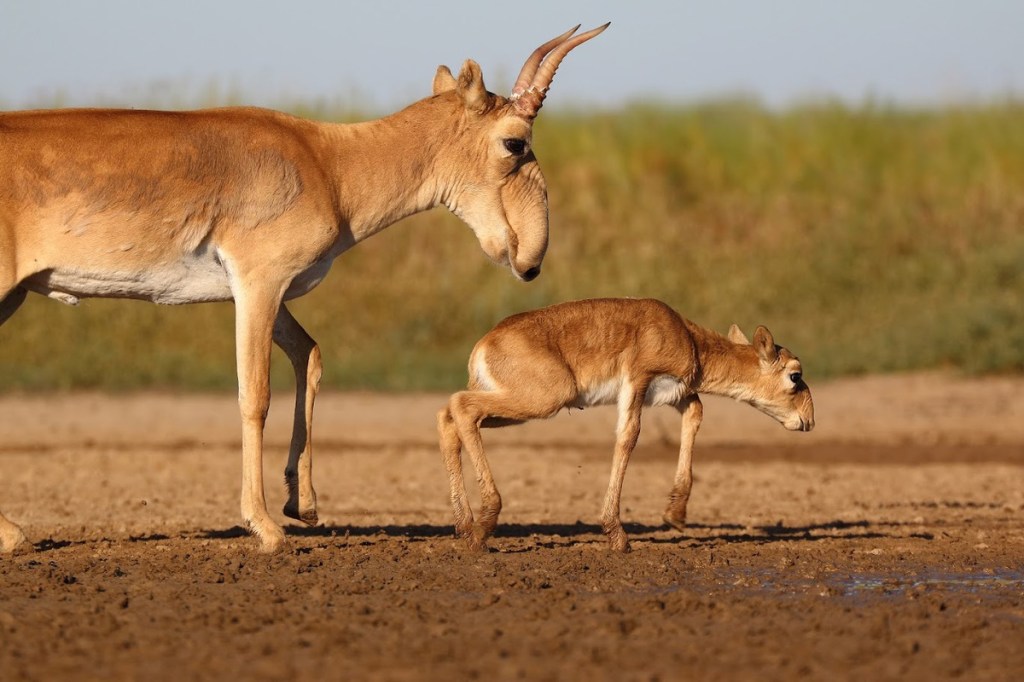
It’s important to add that this population increase isn’t just down to conservation efforts: saiga antelope are very good at multiplying. Males are sexually mature at 19 months, while females are mature at 7-8 months and, more often than not, give birth to twins. In favourable climatic conditions, a population can increase by 60% in one year.
Mass Mortality Events
In 2015, a disease ripped through the population of Kazakh saiga antelope causing 200,000 deaths within three weeks. It was later confirmed as haemorrhagic septicaemia caused by the bacterium Pasteurella multocida. A scary find, is that the bacteria was likely harmlessly living in the saiga’s mouth and an unusually high humidity and air temperature enabled an opportunistic bacterial infection.
This raises a concern that as climate change progresses, these infections may increase in occurrence and there’s a very real possibility of more mass mortality events. There is also the additional factor, that although the population increases quickly, there is low genetic diversity across the board. As a result, there is little ability for genetic adaption to disease.
Other threats like poaching still exist of course, but this potential for epidemics means that huge numbers could die in a very short space of time. That is something that needs to be factored in to conservation efforts.

How you can help
The saiga antelope is a wonderfully strange and lesser-known animal and the fact that it has survived since the Ice Age makes it even more important to keep it going. If you’re interested in helping or simply want to find out more then check out some of the charities that are working so hard to preserve the species.
Charities such as the Saiga Conservation Alliance enable you to adopt an antelope, donate to conservation efforts or volunteer for their cause. Have a look at them if you’re interested.
I write these articles purely for my own enjoyment, but I want them to offer more than just information. Raising awareness, especially for species like this that aren’t well known, can do a lot of good.
Hope you enjoyed reading.
References:
 The Nature Folder
One thought on “The Last Frontier: Exploring the World of the Saiga Antelope”